Kritischer Winkel, geeignete Medien, Konfigurationen und Validierung.
IR100 Messprinzip und Auswahl
Start with the target and medium
IR100 calculates refractive index from the critical angle at the sapphire-prism/process-liquid interface, then converts it to Brix, solids or concentration through a medium-specific application curve. State the target parameter, range, main components and laboratory reference method before choosing a configuration.
For beverages, syrups and dairy, confirm Brix/solids, temperature and bubbles
For acids, alkalis, brine, cleaners and chemicals, confirm materials, temperature, pressure and range
For complex or unknown media, verify the refractive-index-to-concentration relationship with representative samples
Match the configuration to site conditions
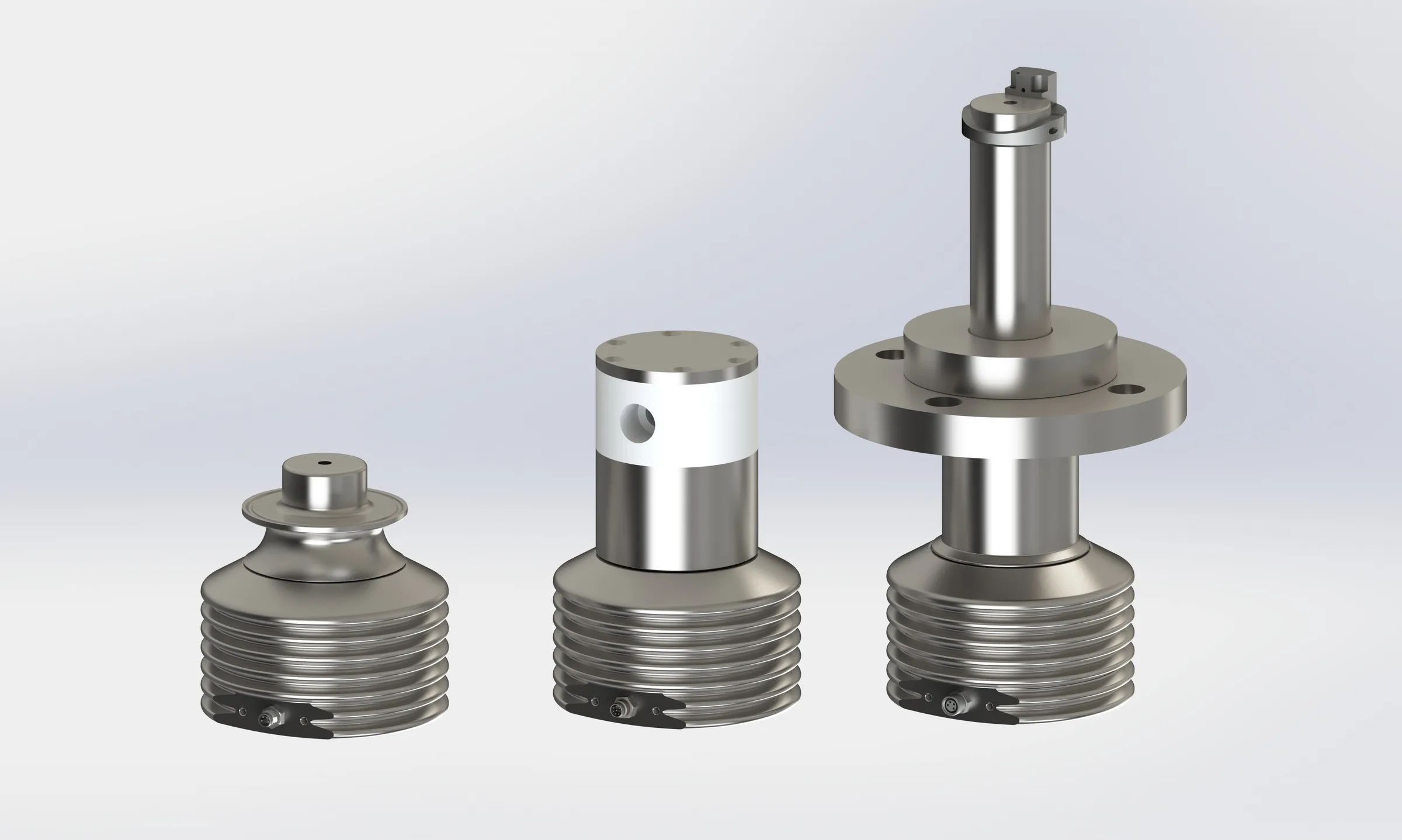
Evaluate hygienic compact, standard universal, high-precision, high-temperature/high-pressure, intrinsically safe and corrosion-resistant configurations. These are preliminary selection cues; final connections, materials, limits and certificates must be checked in the model technical file.
Food and pharma lines: check hygienic clamp, drainability, seals, cleaning and service space
General process service: check flange/process connection, pipe size, flow, temperature/pressure and isolation
Demanding, corrosive or hazardous areas: separately confirm thermal limits, wetted materials, seals, Ex rating and certificate scope
Install, compare and accept
Keep the measuring surface continuously covered by representative medium. Avoid bubbles, dead zones, severe pulsation and stratification. Record online value, sample temperature, sampling time and laboratory reference at several operating points before deciding whether calibration or adjustment is needed.
Confirm flow direction, full pipe, drainage and cleaning access for pipe installation
Confirm insertion depth, mixing effects and level changes in tanks
Include deviation, repeatability, alarms, communication and record completeness in acceptance
Häufige Fragen
Can an IR100 be used directly on highly colored or turbid liquids?
Color is usually not the primary input for critical-angle measurement, but bubbles, crystals, deposits, flow state and prism cleanliness still affect representativeness. Verify high-turbidity or complex media with samples or a site trial.
Can the standard-version parameters be used for a high-temperature/high-pressure version?
No. Temperature, pressure, seals, materials and thermal design must be checked separately. A shared illustrative image does not mean that different configurations have identical limits.