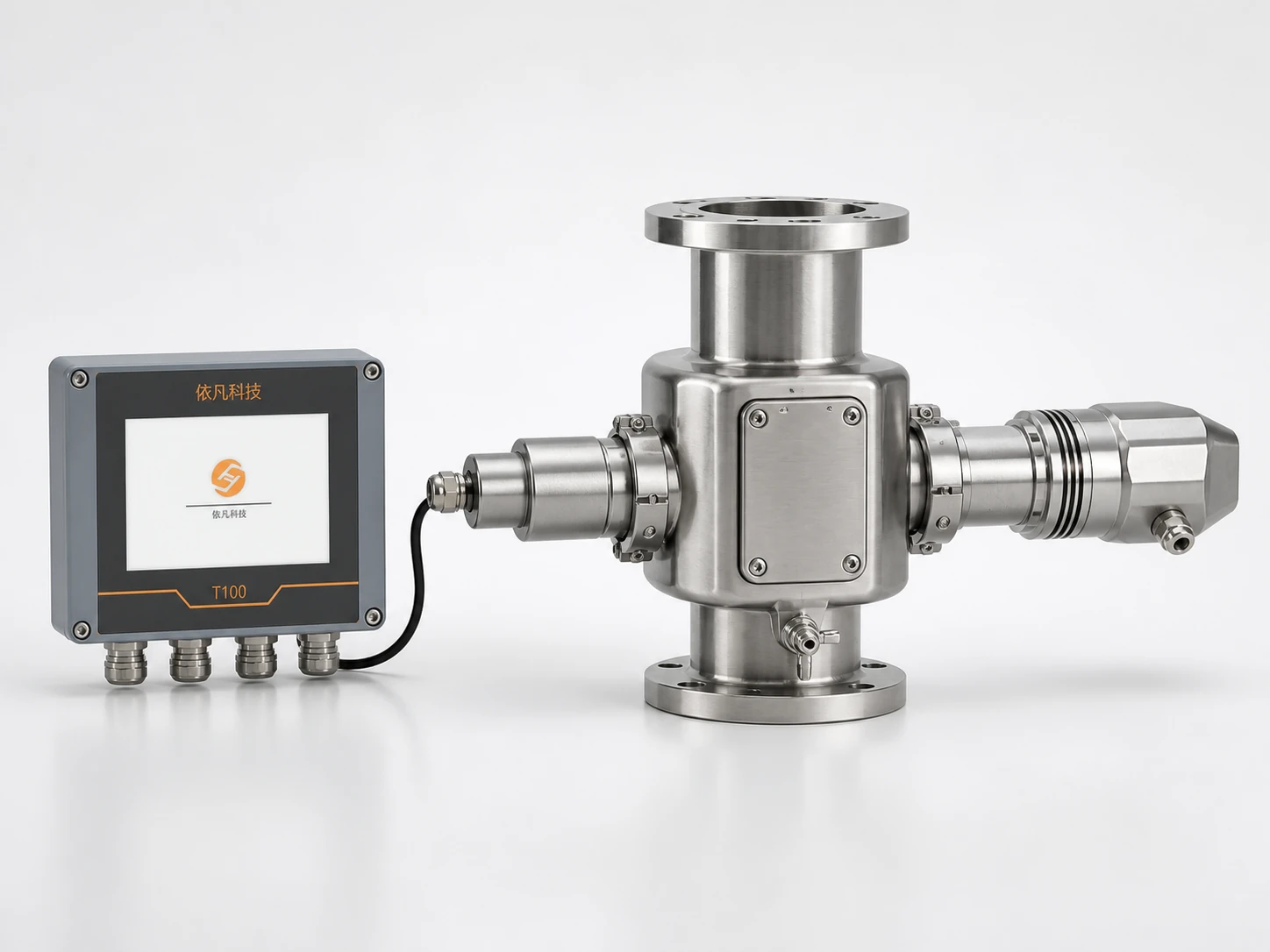
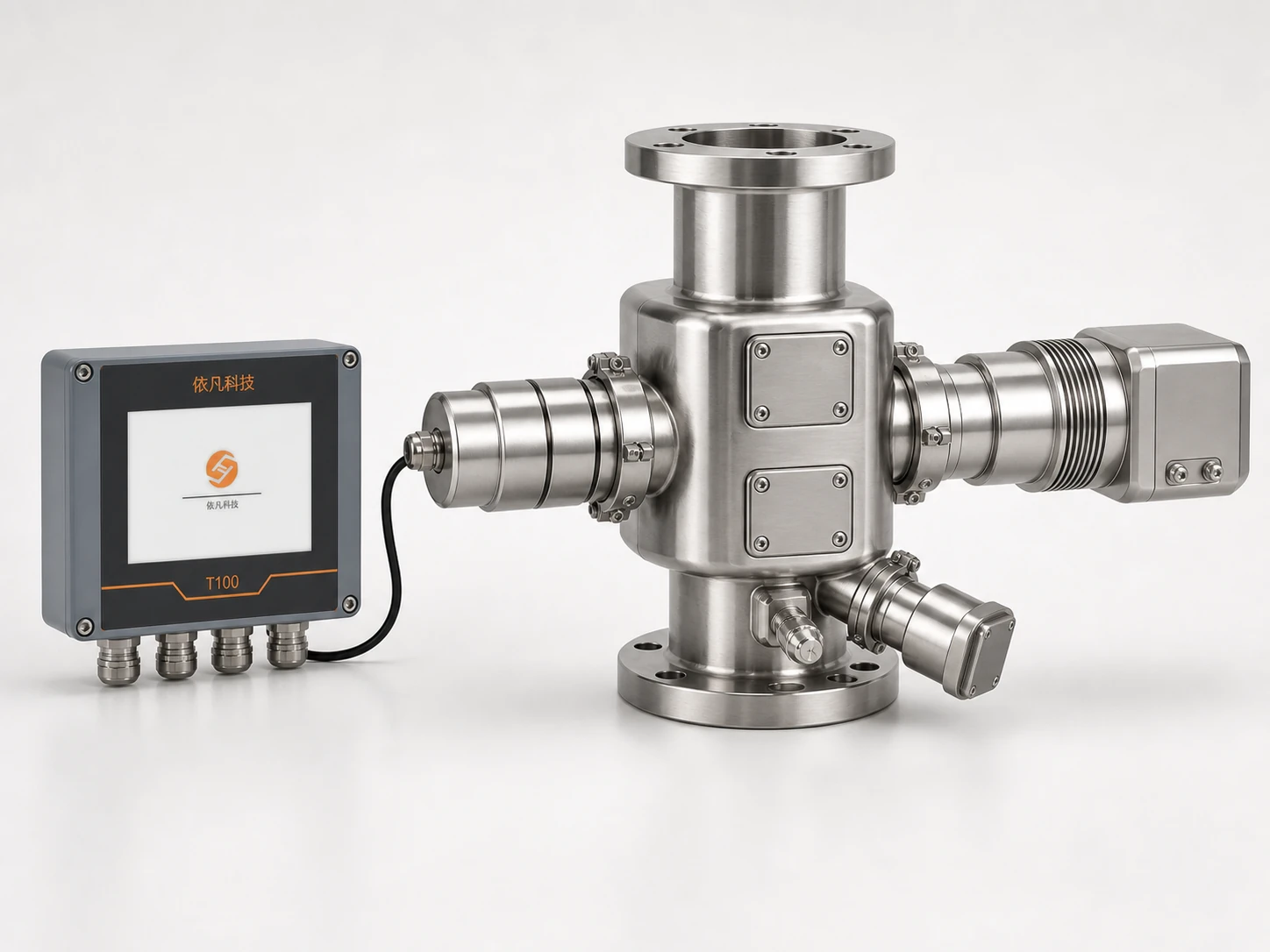
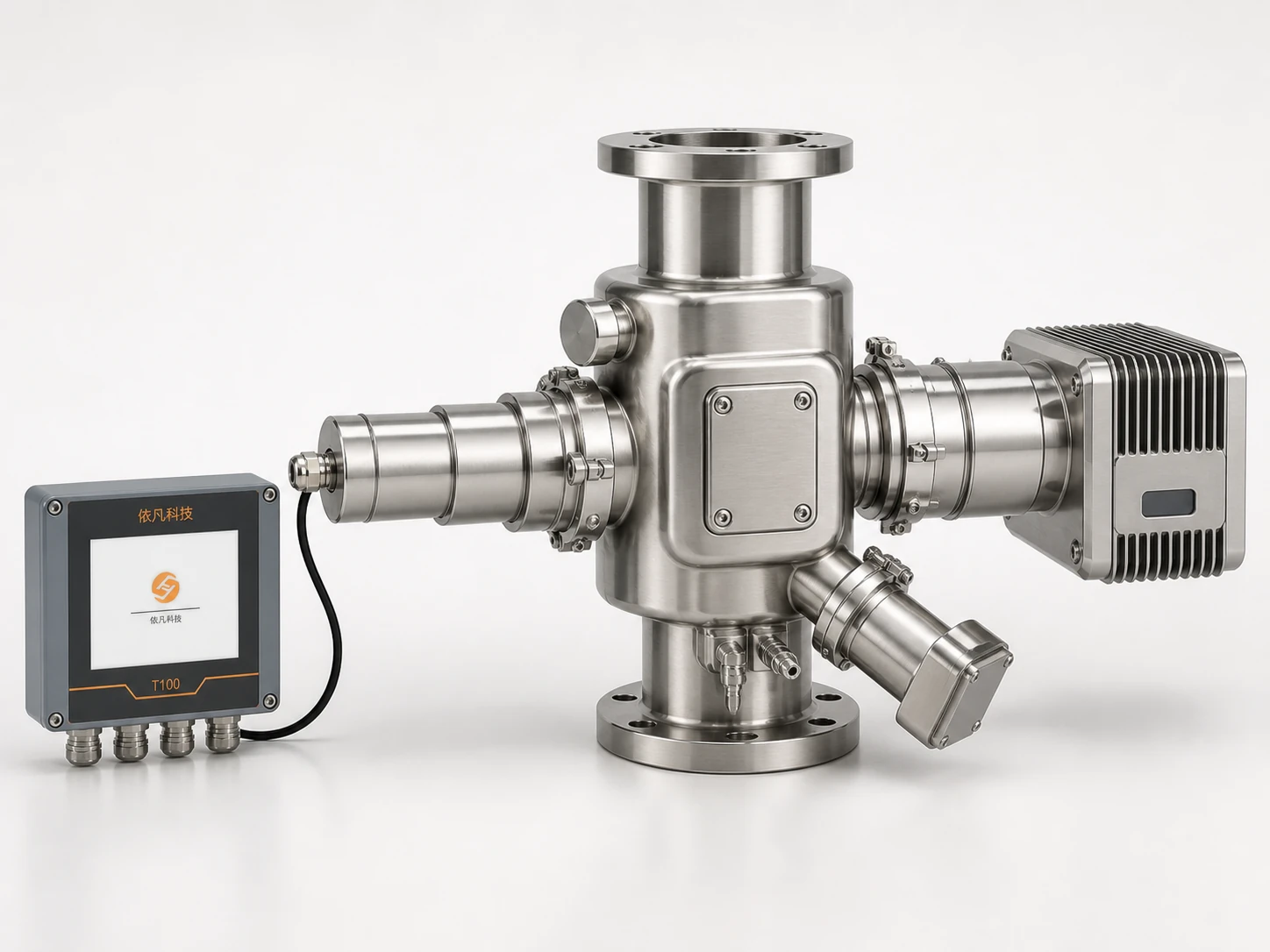
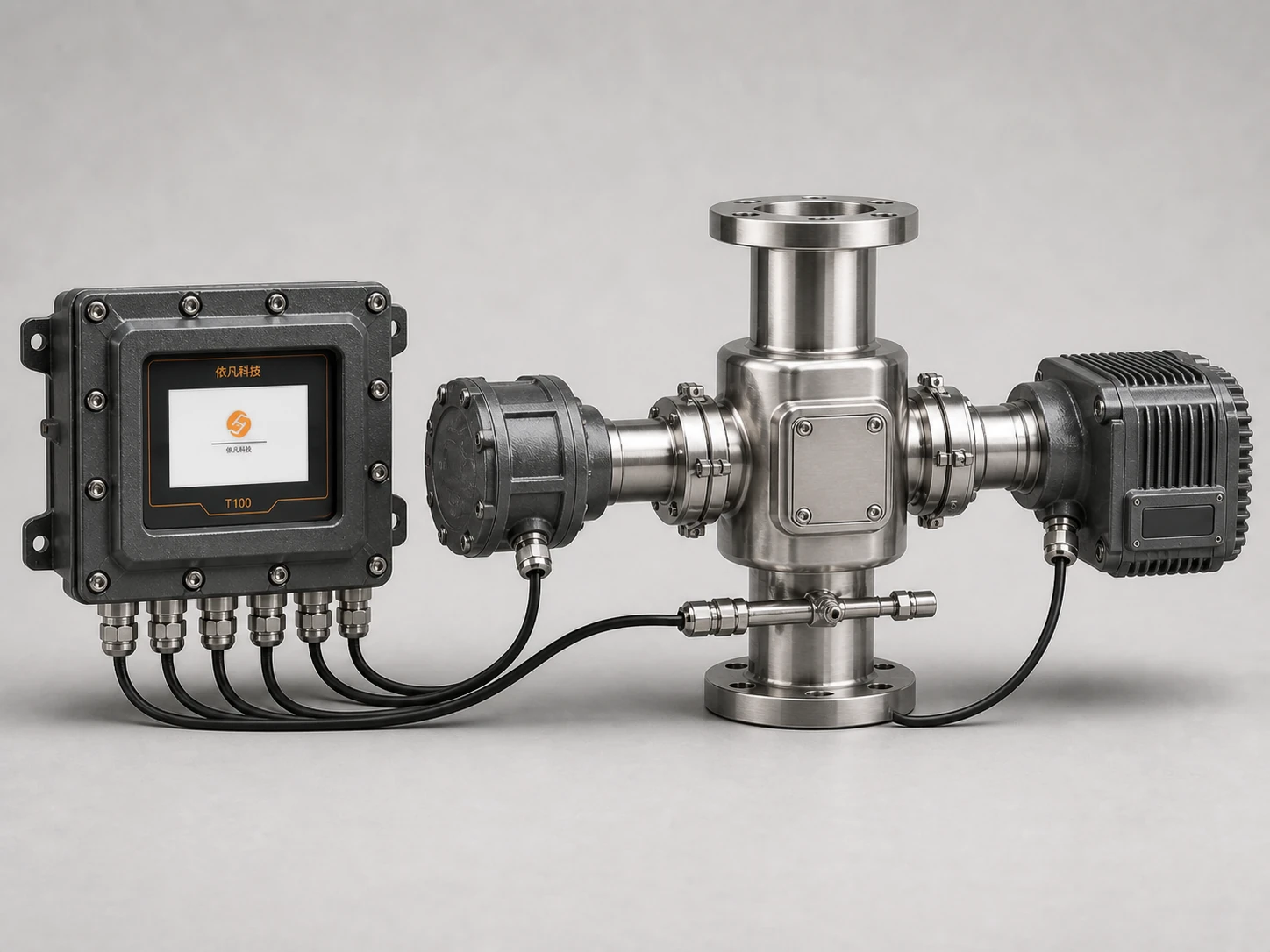
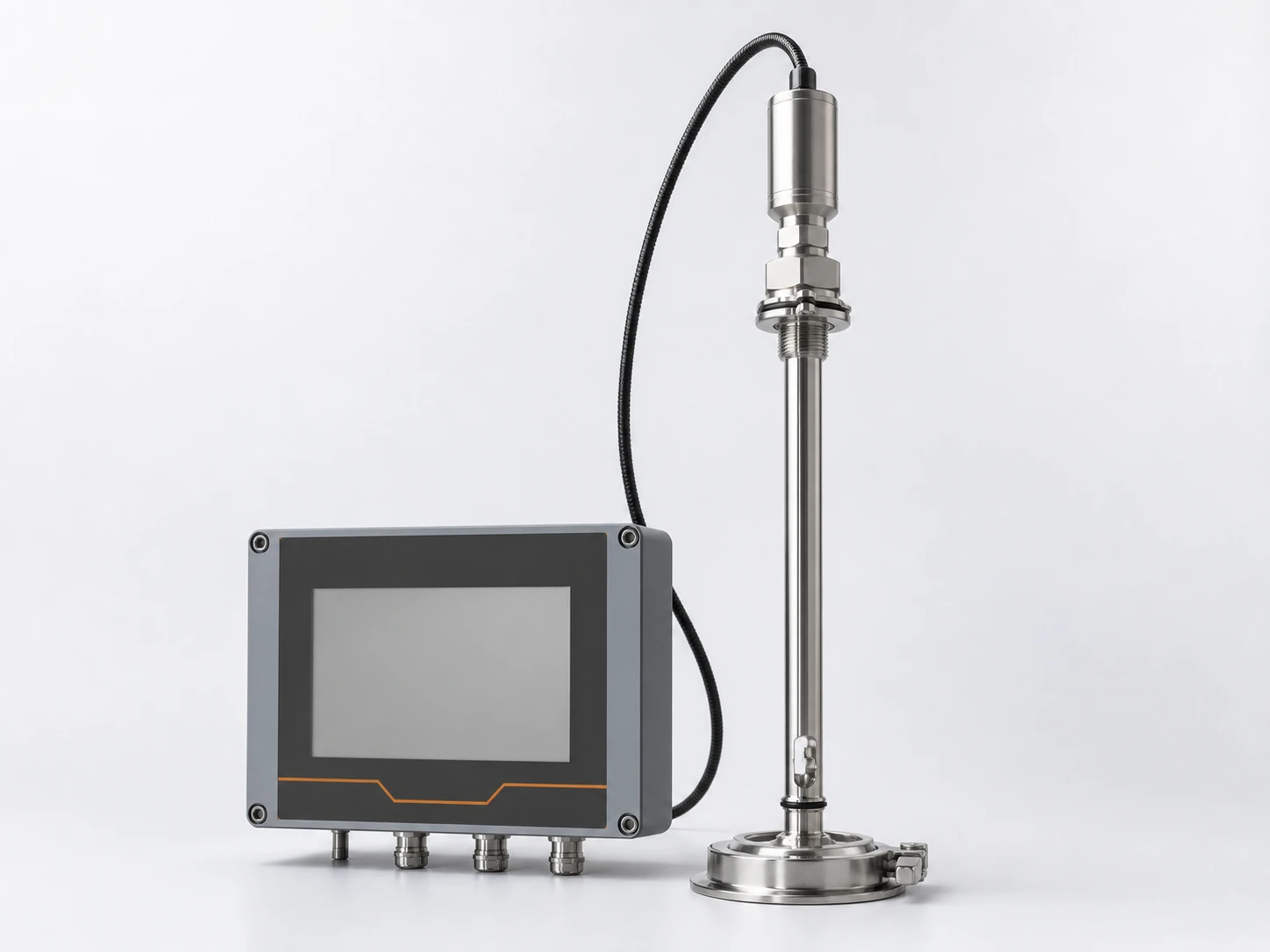
Basé sur la spectroscopie d'absorption UV-Vis-NIR (double faisceau / plein spectre), il mesure en ligne les matières organiques (SAC254/COD), la couleur, la turbidité, les nitrates, l'azote ammoniacal et plus — sans réactifs, avec nettoyage automatique et compensation automatique de turbidité.
AB100 · Analyseur d'Absorption Optique en Ligne
Basé sur la spectroscopie d'absorption UV-Vis-NIR (double faisceau / plein spectre), il mesure en ligne les matières organiques (SAC254/COD), la couleur, la turbidité, les nitrates, l'azote ammoniacal et plus — sans réactifs, avec nettoyage automatique et compensation automatique de turbidité.
Analyse in situ, multi-longueurs d'onde des process et bioprocédés
Insertion in situ de sonde à fibre optique
Absorption multi-longueurs d'onde en temps réel
Forte teneur en solides sans colmater la cellule à flux
OD de bioréacteurs / densité cellulaire
Applications typiques:OD de bioréacteurs, Densité cellulaire, Surveillance des procédés de réaction, Fluides à forte teneur en solides
Caractéristiques principales
AB100 Analyseur à Sonde à Fibre Optique In Situ — Caractéristiques principales
Parameter
Value
Principe de mesure
Absorption UV/visible par fibre optique
Longueurs d'onde
Multiples optionnelles (ex. 280/600/860 nm)
Paramètres mesurés
Absorbance / OD / concentration
Température d'échantillon
0–80℃
Matériau de sonde
316L / Hastelloy / fenêtre saphir
Signal de sortie
4-20mA, RS485 Modbus
Indice de protection
IP67
Questions fréquentes
Which parameters can the AB100 online optical absorption analyzer measure?
With the appropriate wavelength, path length and model, the AB100 can measure SAC254, COD-related indicators, color, turbidity, nitrate and other parameters with useful spectral absorption features. Confirm the target with representative samples.
How does the optical absorption analyzer handle turbidity interference?
Reference wavelengths, dual-beam and multi-wavelength models can compensate for turbidity and temperature. High suspended solids, bubbles and fouled windows can still affect results, so select the path length and cleaning method accordingly.
How are the AB100 wavelength, path length and detector selected?
Start with the target component's absorption feature and concentration range, then consider turbidity, color, flow and installation to choose the wavelength, path length, light source and detector. Unknown media should be tested with samples or a field trial.
What installation options are available for the AB100?
Depending on the model, immersion probes, pipe flow cells or in-situ fiber probes can be evaluated. Keep the optical windows fully exposed to the sample and provide access for venting, cleaning and maintenance.
Does the AB100 require reagents, and can it be used in hazardous areas?
Optical absorption measurement normally needs no daily chemical reagents, and automatic cleaning can reduce maintenance. Hazardous-area service requires the appropriate certified configuration and a check of site limits.