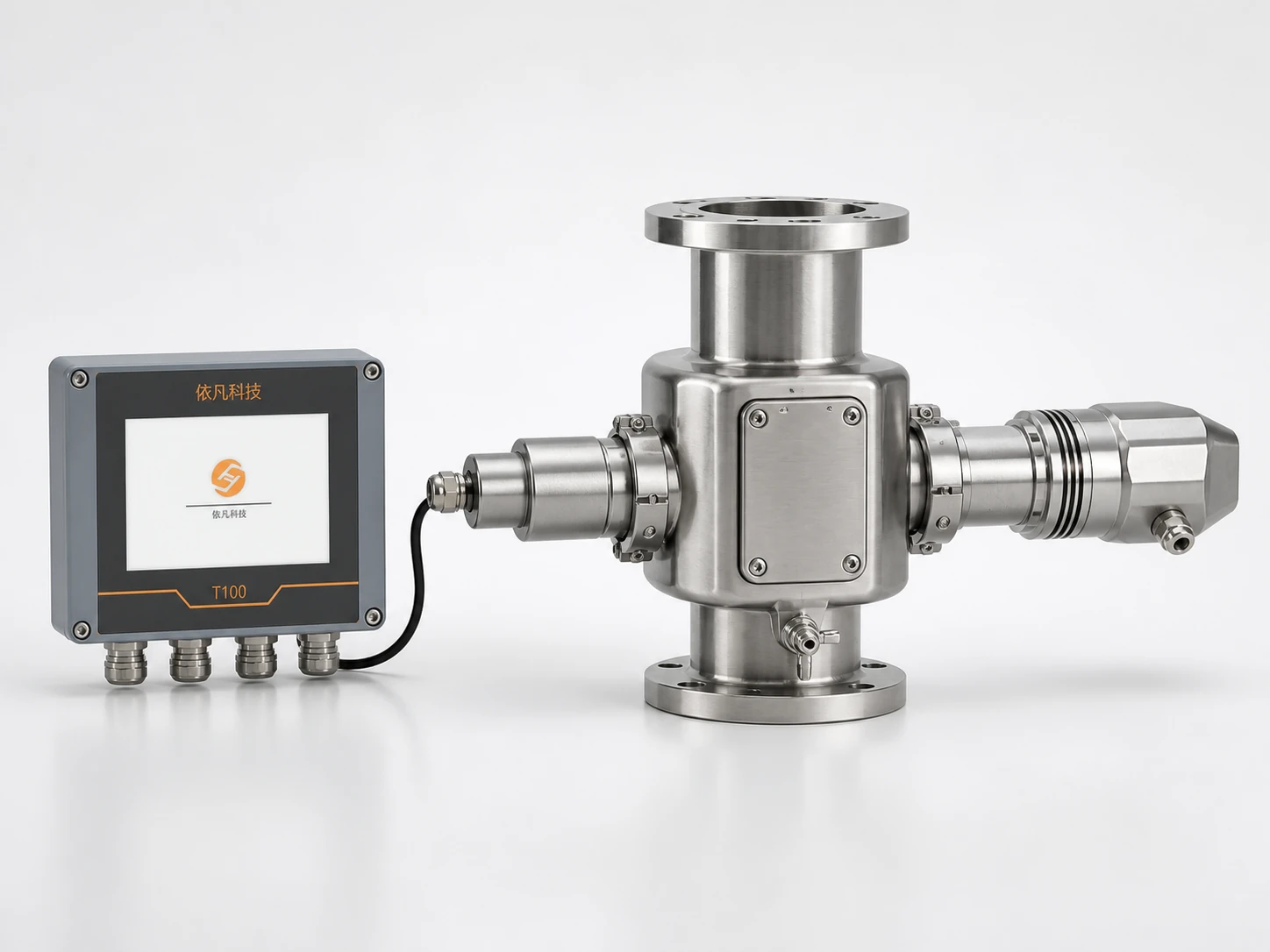
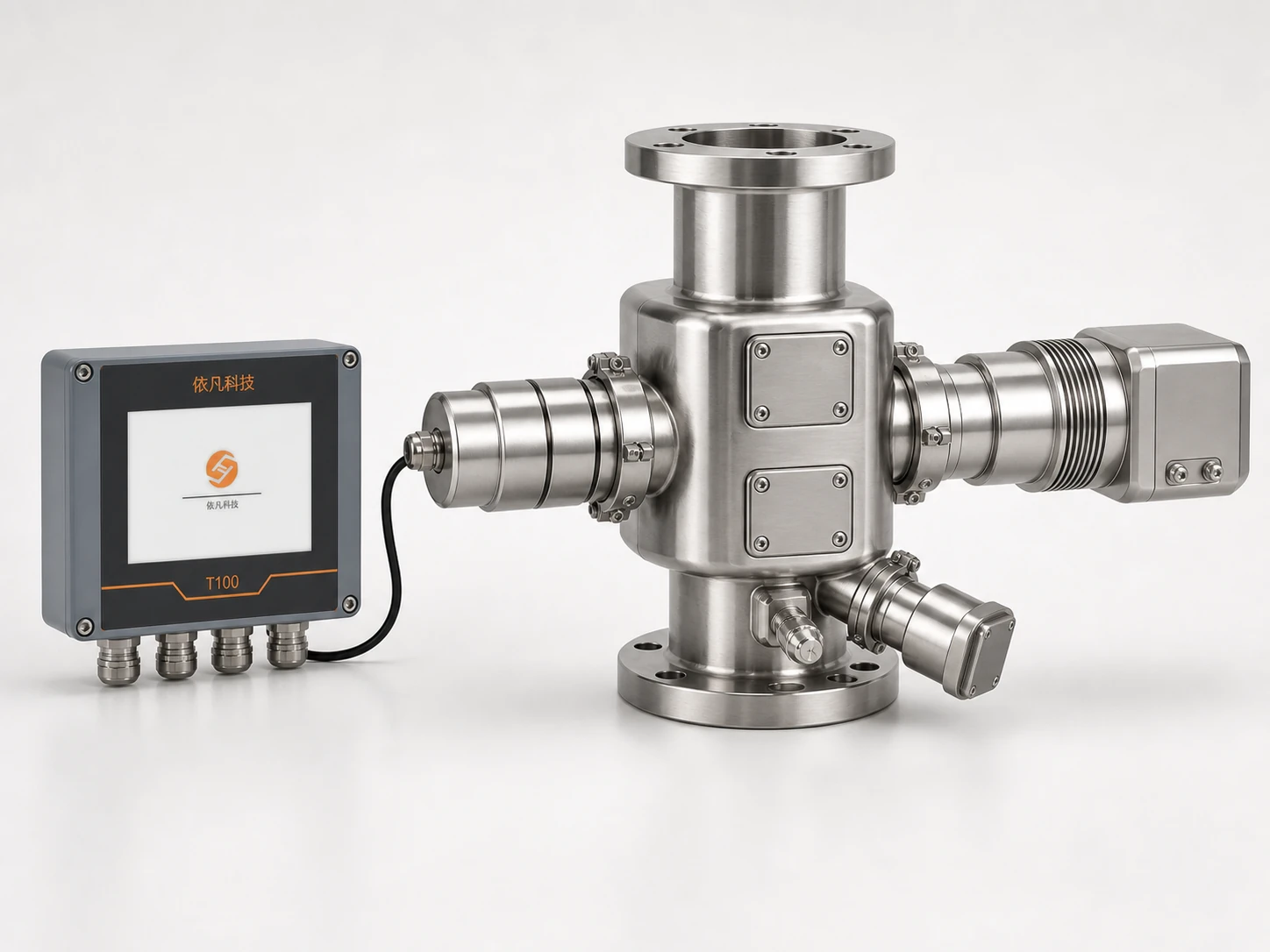
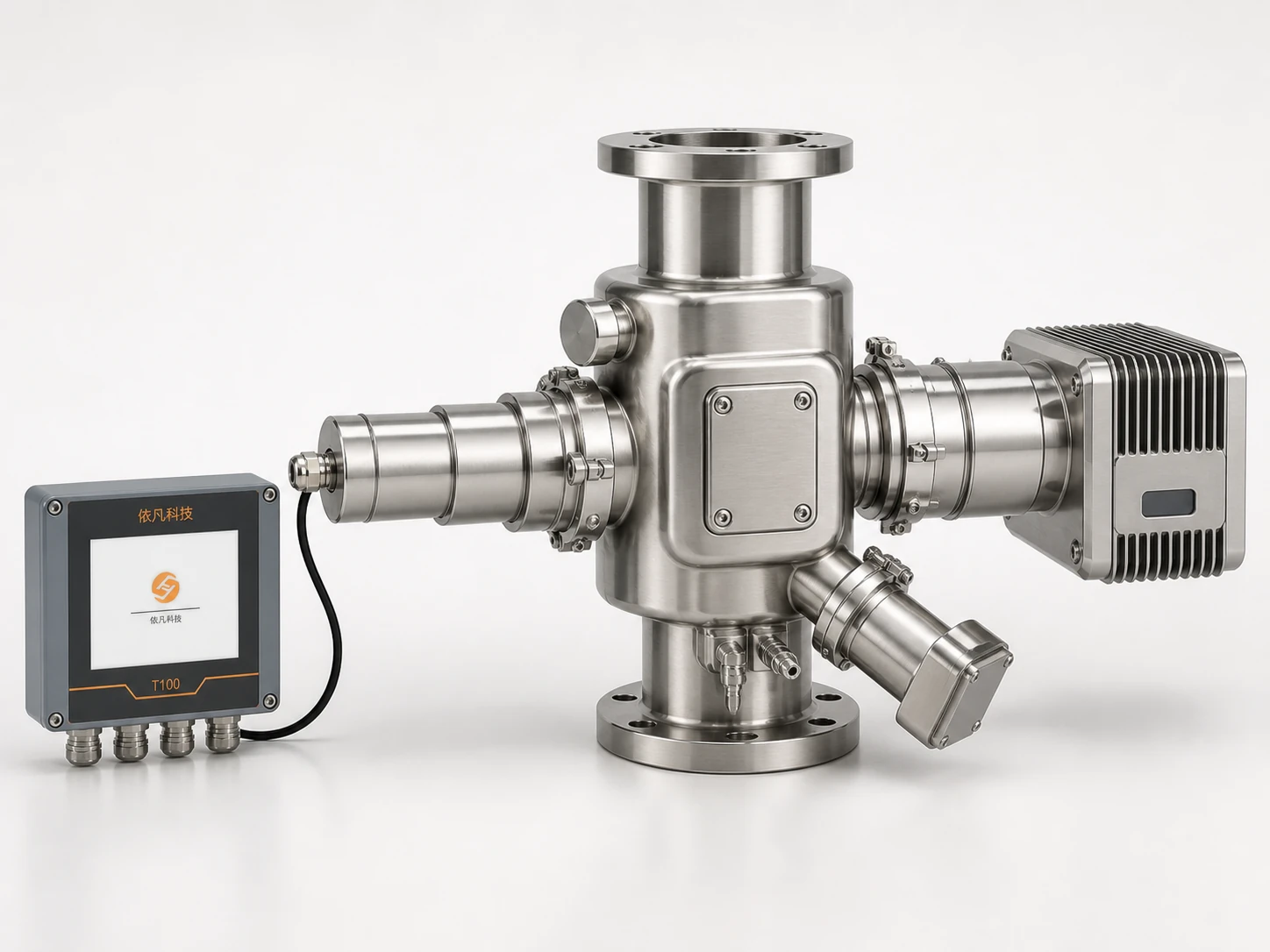
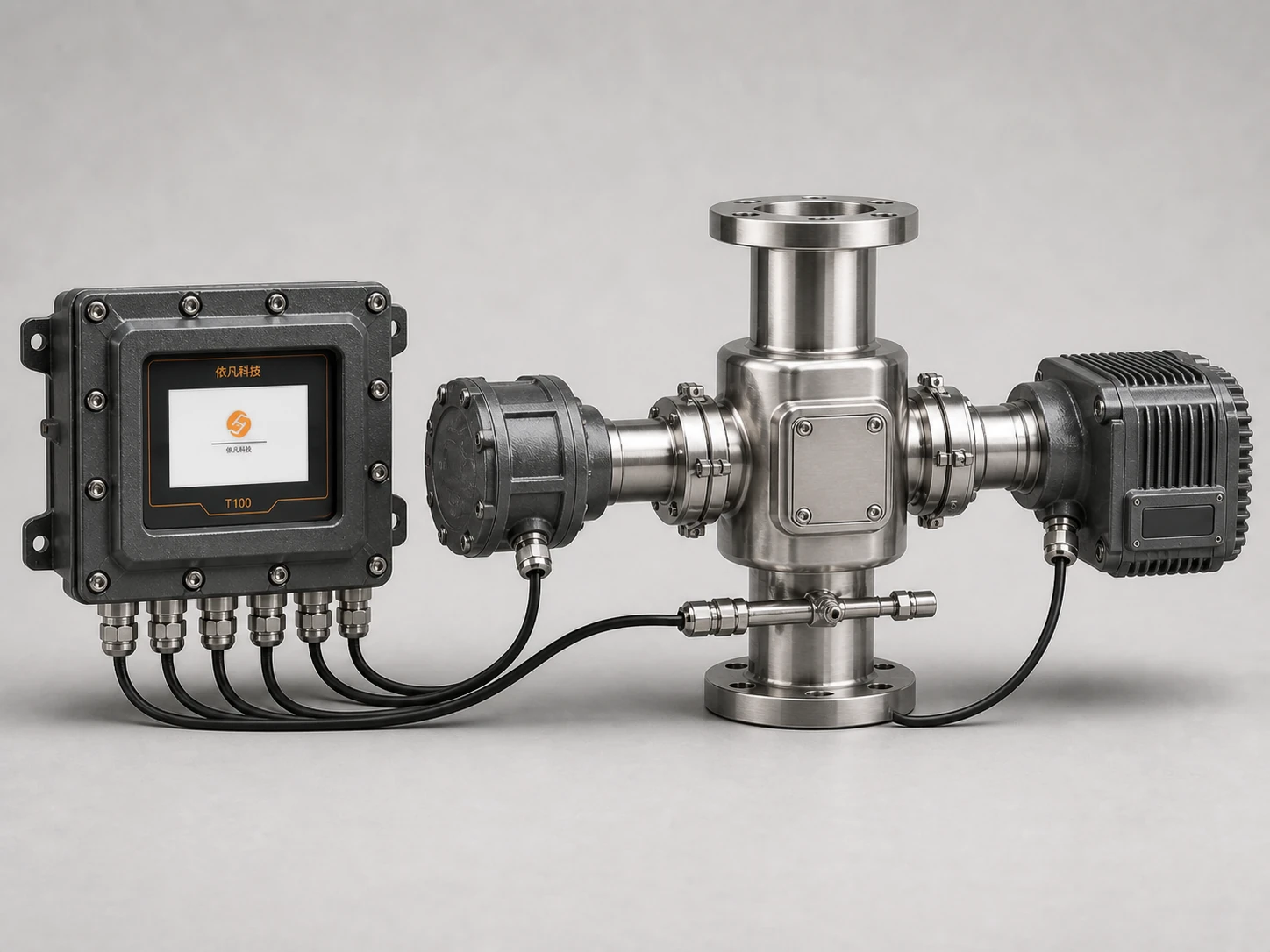
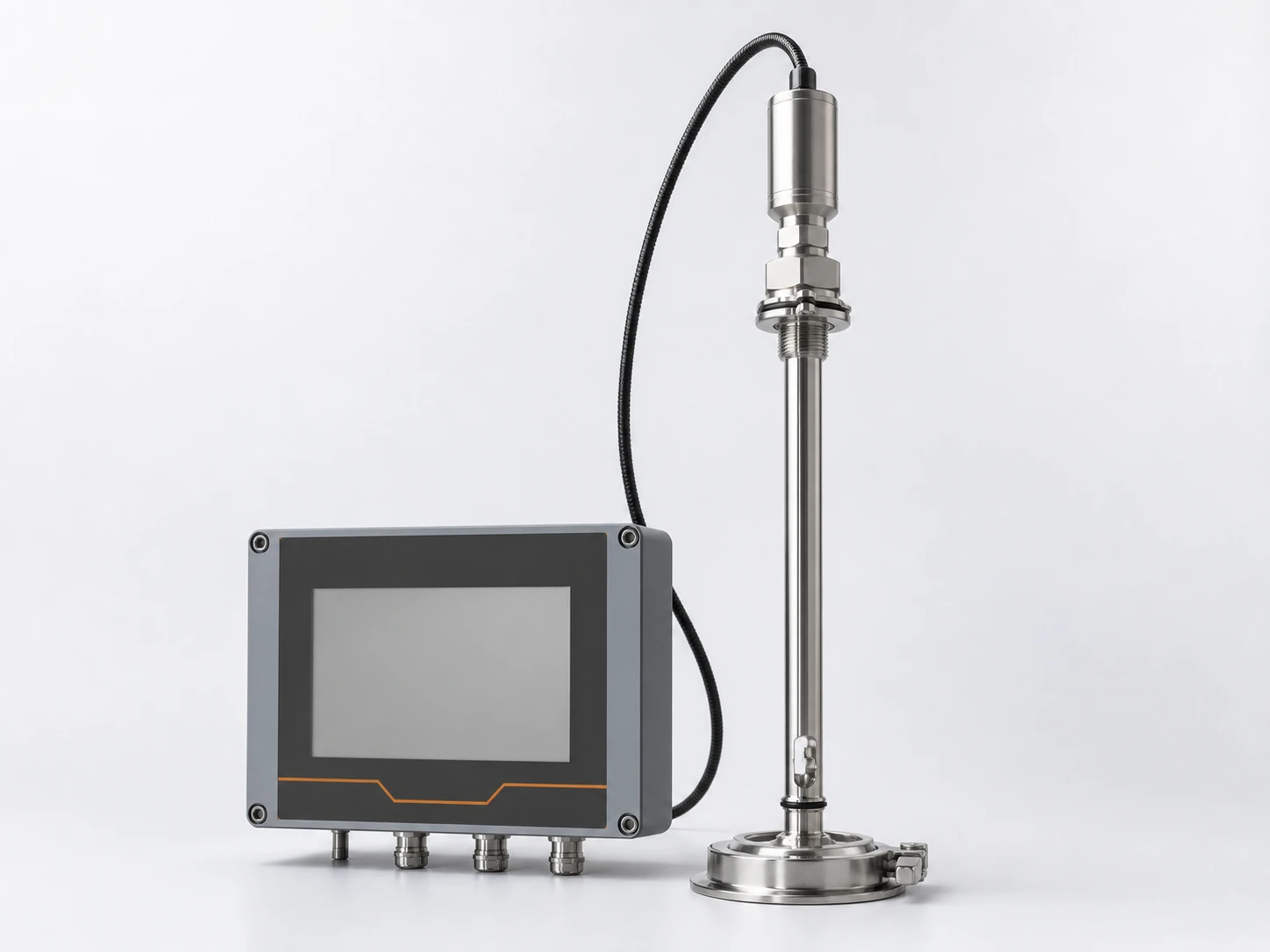
Based on UV-Vis-NIR absorption spectroscopy (dual-beam / full spectrum), it measures organics (SAC254/COD), color, turbidity, nitrate, ammonia nitrogen and more online — reagent-free, with automatic cleaning and automatic turbidity compensation.
AB100 · Online Optical Absorption Analyzer
Based on UV-Vis-NIR absorption spectroscopy (dual-beam / full spectrum), it measures organics (SAC254/COD), color, turbidity, nitrate, ammonia nitrogen and more online — reagent-free, with automatic cleaning and automatic turbidity compensation.
In-situ, multi-wavelength process and bioprocess analysis
Fiber optic probe in-situ insertion
Multi-wavelength real-time absorption
High solids content without clogging the flow cell
Bioreactor OD / cell density
Aplicações típicas:Bioreactor OD, Cell density, Reaction process monitoring, High solids media
Principais especificações
AB100 In-Situ Fiber Optic Probe Analyzer — Principais especificações
Parameter
Value
Measurement principle
Fiber-optic UV/visible absorption
Measurement wavelengths
Multiple optional (e.g. 280/600/860 nm)
Measured parameters
Absorbance / OD / concentration
Sample temperature
0–80℃
Probe material
316L / Hastelloy / sapphire window
Output signal
4-20mA, RS485 Modbus
Protection class
IP67
Perguntas frequentes
Which parameters can the AB100 online optical absorption analyzer measure?
With the appropriate wavelength, path length and model, the AB100 can measure SAC254, COD-related indicators, color, turbidity, nitrate and other parameters with useful spectral absorption features. Confirm the target with representative samples.
How does the optical absorption analyzer handle turbidity interference?
Reference wavelengths, dual-beam and multi-wavelength models can compensate for turbidity and temperature. High suspended solids, bubbles and fouled windows can still affect results, so select the path length and cleaning method accordingly.
How are the AB100 wavelength, path length and detector selected?
Start with the target component's absorption feature and concentration range, then consider turbidity, color, flow and installation to choose the wavelength, path length, light source and detector. Unknown media should be tested with samples or a field trial.
What installation options are available for the AB100?
Depending on the model, immersion probes, pipe flow cells or in-situ fiber probes can be evaluated. Keep the optical windows fully exposed to the sample and provide access for venting, cleaning and maintenance.
Does the AB100 require reagents, and can it be used in hazardous areas?
Optical absorption measurement normally needs no daily chemical reagents, and automatic cleaning can reduce maintenance. Hazardous-area service requires the appropriate certified configuration and a check of site limits.